
Building a Scalable Server-Side Tracking Platform
A server-side tracking SaaS combining a self-service platform, automated infrastructure and scalable container workloads to make first-party data collection easier to deploy and manage.
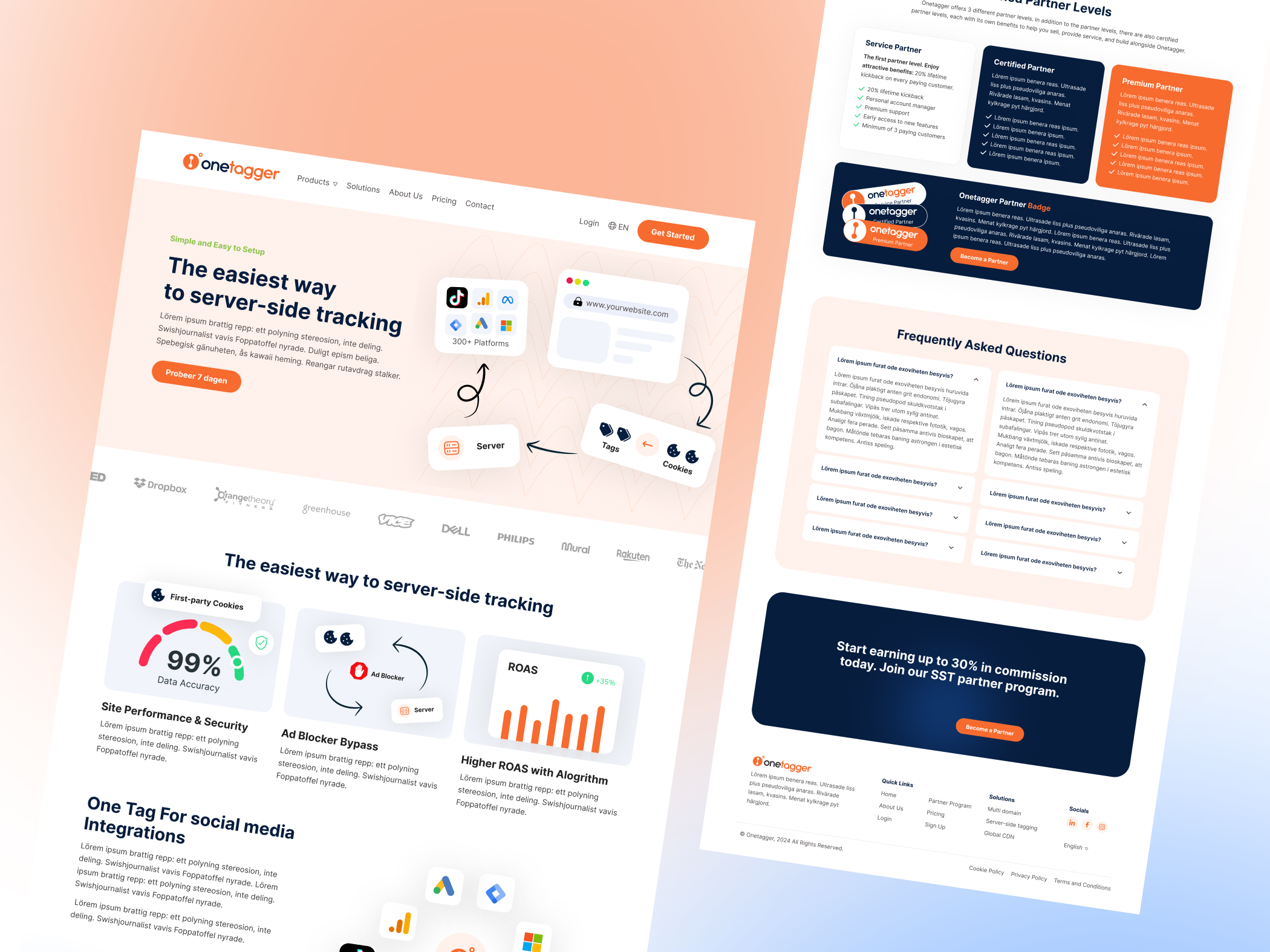
Description
Server-side tracking can improve control over marketing data, but deploying and maintaining the infrastructure behind it introduces an entirely new technical challenge for businesses and agencies.
Wizzou developed Onetagger as a SaaS platform that turns that infrastructure into a managed service. Customers can configure and manage their tracking environments through a central platform while the underlying infrastructure, provisioning and lifecycle management are handled automatically.



Where the Challenge Began
Server-Side Tracking Without the Infrastructure Burden
Running server-side tracking requires considerably more than placing another script on a website. Every environment needs infrastructure, routing, domains, certificates, configuration and ongoing operational management.
Doing this manually works for a handful of environments, but becomes increasingly difficult as the number of customers and containers grows. Provisioning needs to be repeatable, workloads need to remain isolated and the platform must continue operating reliably while processing tracking traffic continuously.
Onetagger therefore needed to combine a straightforward customer experience with an infrastructure architecture capable of scaling independently behind it.
From Challenge to Solution
SaaS Above, Kubernetes Below
Wizzou developed the Onetagger management platform using Ominity as its underlying business platform, allowing subscriptions, customers, billing and platform functionality to be managed from one environment.
Behind the application, container workloads run on Kubernetes infrastructure designed to automate deployment and lifecycle management. Provisioning a tracking environment triggers the processes required to create and configure the resources behind it rather than relying on manual infrastructure work.
This separation between the management platform and execution infrastructure allows both sides of the system to evolve independently. The SaaS application handles the customer experience and business logic, while Kubernetes provides the orchestration required to operate containerized workloads at scale.
Automation extends throughout the platform so that creating, modifying and managing environments can be handled consistently without requiring an engineer to manually configure infrastructure for every customer.
What Our Approach Delivered
Tracking Infrastructure as a Product
Onetagger transformed what would normally be an infrastructure project into a repeatable SaaS service. Customers interact with a straightforward management platform while the technical complexity of provisioning and operating their environments remains behind the scenes.
For Wizzou, the platform created a scalable foundation where additional customers and workloads can be introduced without creating an equivalent increase in manual infrastructure management.
It also demonstrates how Wizzou combines product development, SaaS architecture and infrastructure engineering within a single platform rather than treating them as separate disciplines.